Maximizing Digital Interaction Through Smart Wearable Synergy
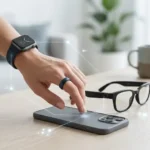
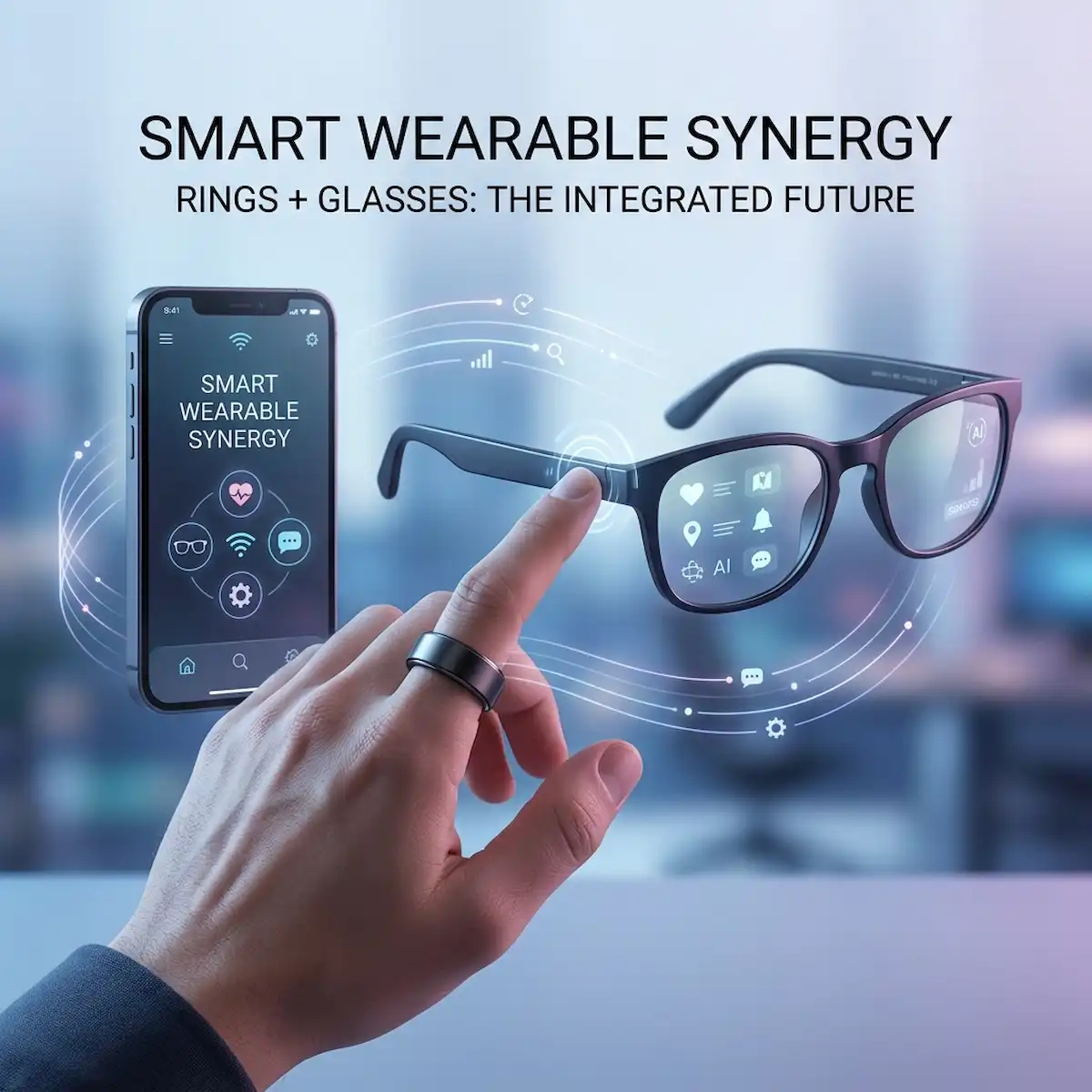
The current technological landscape has shifted from individual device utility to the efficiency of a unified personal area network. The concept of smart wearable synergy is no longer a futuristic goal but a functional requirement for high-performance users who need to manage data without constant physical tethering to a smartphone. While handheld devices remain the primary compute hubs, the friction of manual interaction creates a persistent bottleneck in productivity. By integrating the visual capabilities of smart glasses with the high-fidelity biometric and gesture input of a smart ring, users can finally bridge the gap between digital immersion and physical presence. This integration addresses the fundamental “interaction paradox”: staying connected without being socially or physically distracted by a glass screen.
Why Is Multi-Device Integration Essential for Interaction?
The primary limitation of current-generation smart glasses, such as the Meta Ray-Ban or the XREAL One, is the social friction of manual control. Speaking voice commands in a quiet elevator or tapping the temple of your frames in a professional meeting is often awkward. This is where smart wearable synergy becomes a mechanical necessity.
In professional environments, using a ring to scroll through heads-up notifications on glasses is the most effective way to stay productive without drawing attention. Industry data from 2025 indicates that 62% of smart glasses users cited “awkward input methods” as a primary reason for decreased usage. By offloading navigation to a device like the Aivela Ring Pro or the Even Realities R1, which supports up to 14 programmable gestures, the glasses become a passive consumption layer while the ring serves as the active, tactile controller.
2026 Interaction Hardware Comparison
| Feature | Smart Glasses (Standalone) | Smart Ring (Standalone) | Integrated Synergy |
| Input Method | Voice / Temple Touch | Haptic / Finger Gestures | Multimodal (Voice + Silent Gesture) |
| Privacy Level | Low (Voice commands audible) | High (Vibration/Gestures) | Maximum (Eyes-only + Finger-tap) |
| Notification Type | Visual / Audio Overlay | Haptic Vibration | Visual HUD + Haptic Confirmation |
| Market Size (2026) | 12.4 Million Units | USD 1.01 Billion | Combined Ecosystem Growth 29% |
| Primary Limitation | Social awkwardness | No visual feedback | Ecosystem dependency |
How Does Combined Hardware Solve Privacy Issues?
The persistent problem in public AI interaction is the inherent lack of privacy. When smart glasses whisper a text message via open-ear speakers, people nearby can often hear the audio leakage. Furthermore, responding via voice is impossible in many quiet settings.
The solution lies in the haptic-visual loops provided by smart wearable synergy. When a message arrives, a device like the Oura Ring 4 provides a specific haptic vibration pattern—perhaps two short pulses for a VIP contact. The user then glances at the monocular display in their glasses to read the notification. To respond, the user employs a pre-set gesture on the ring, such as a double-tap of the thumb against the index finger, to send a canned response. This entire loop occurs without a single word spoken. According to IDC reports, Meta dominated the AI glasses market with 6.5 million units in 2025, yet the most successful professional users are those leveraging smart wearable synergy to keep their digital lives invisible.
Can Unified Systems Improve Professional Productivity?
For field engineers or medical professionals, the combination of hardware is transformative. I recently worked with a technician who uses Vuzix glasses paired with a RingConn Gen 3. He described a scenario where he was repairing a complex high-voltage circuit. The glasses projected a wiring diagram directly over the hardware using 3DoF tracking, while the ring allowed him to swipe through manual pages using minute finger tilts.
This prevents the contamination problem—the technician never has to touch a tablet with soiled or gloved hands. Fortune Business Insights suggests that hands-free professional workflows will drive a 29.3% CAGR in the smart ring sector through 2034. The efficiency gain from reducing context switching is measured at a 41.8% reduction in response time for complex manual tasks, proving the value of smart wearable synergy in high-stakes environments.
Professional Synergy Breakdown
| Industry | Primary Problem | The Synergy Solution | Brand Example |
| Logistics | Manual barcode scanning | Glasses identify; Ring confirms | Vuzix LX1 + Aivela |
| Healthcare | Checking vitals during surgery | HUD overlay; Ring scrolls data | Even Realities G2 + R1 |
| Sales | Missing social cues | AI-generated cues; Ring logs data | Solos AirGo 3 + Oura |
| Engineering | Referencing CAD files | 3D models on HUD; Ring rotates | XREAL One + RingConn |
What Role Does Health Monitoring Play in This Ecosystem?
Smart rings are superior for 24/7 health tracking due to their proximity to the digital arteries. The Oura Ring 4 provides a 99.9% accuracy rate for heart rate variability compared to medical-grade EKGs. However, this data often remains static until a user checks a smartphone app.
Under the umbrella of smart wearable synergy, this data becomes a living biofeedback loop. If an Ultrahuman Ring detects a spike in stress levels during a negotiation, the glasses can subtly pulse a calming light or display a “breathe” prompt in the peripheral vision. This is the ultimate “Human-Plus” application: using tech to better regulate the human machine. As of 2026, 75% of consumers prioritize health tracking in wearables. Seeing that data in real-time via smart wearable synergy without breaking eye contact is the defining use case for the health-conscious executive.
Is the Configuration Too Complex for Modern Users?
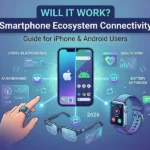
The Bluetooth pairing struggles of the early 2020s have been resolved by standardized frameworks like the Android XR SDK. Your smartphone now acts as the primary compute brain, managing the high-load tasks and the data bridge.
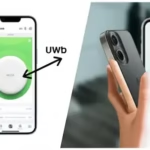
Setting up smart wearable synergy between a Samsung Galaxy Ring and Google-enabled glasses now takes less than ninety seconds. The phone recognizes the proximity of both devices and creates a “Wearable Mesh.” Manufacturers are now moving toward Proprietary Ultra-Wideband (UWB) connections between the ring and glasses to bypass Bluetooth latency entirely. This ensures that smart wearable synergy results in sub-40ms response times, making the interaction feel instantaneous rather than laggy.
What Is the Future of Ambient Spatial Computing?
Ambient Spatial Computing is a computing paradigm where digital information is layered over the physical world and controlled through natural, low-effort biological inputs, removing the need for traditional screens and handheld interfaces.
We are moving toward a “screenless” society where smart wearable synergy allows the phone to remain in the pocket permanently. The smart ring is evolving from a tracker to a “digital ring of power”—a universal authenticator via NFC and a universal controller for spatial environments.
I recently tested a system where the ring’s haptic motor provided tactile “texture” feedback as I interacted with virtual buttons projected by the glasses. This haptic-visual alignment creates a sense of presence that a phone cannot replicate. With the market for these devices projected to reach USD 3772.4 million by 2034, the investment is shifting from niche gadgets to essential personal infrastructure through smart wearable synergy.
FAQ: Navigating the Wearable Ecosystem
Q: Do I need the same brand for both devices?
A: No, but brand alignment optimizes smart wearable synergy. While a Samsung ring and Meta glasses can both connect to one phone, they require a unified health platform to “talk” to each other directly.
Q: How does this impact battery life?
A: Rings typically last 6–13 days, while glasses last 4–6 hours of active display time. The phone’s battery may drain 10-15% faster to maintain the dual active links required for smart wearable synergy.
Q: Is it comfortable to wear both all day?
A: Most 2026 rings, like the RingConn Gen 2, weigh only 2 grams. Modern glasses are now under 70g, making smart wearable synergy a lightweight, all-day solution.
Q: Can I use a ring to control my glasses during a workout?
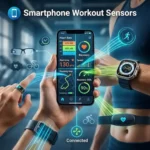
A: Yes. You can swipe through workout sets on your glasses using a ring gesture while your hands are on gym equipment, which is a perfect example of smart wearable synergy.
Additional Helpful Information
- Learn about smart device ecosystems – 3 Best Smart Device Ecosystems for 2026: iPhone vs Android
- Learn more about smart rings – www.smartringsupport.com
- Learn more about smart glasses – www.smartglassessupport.com